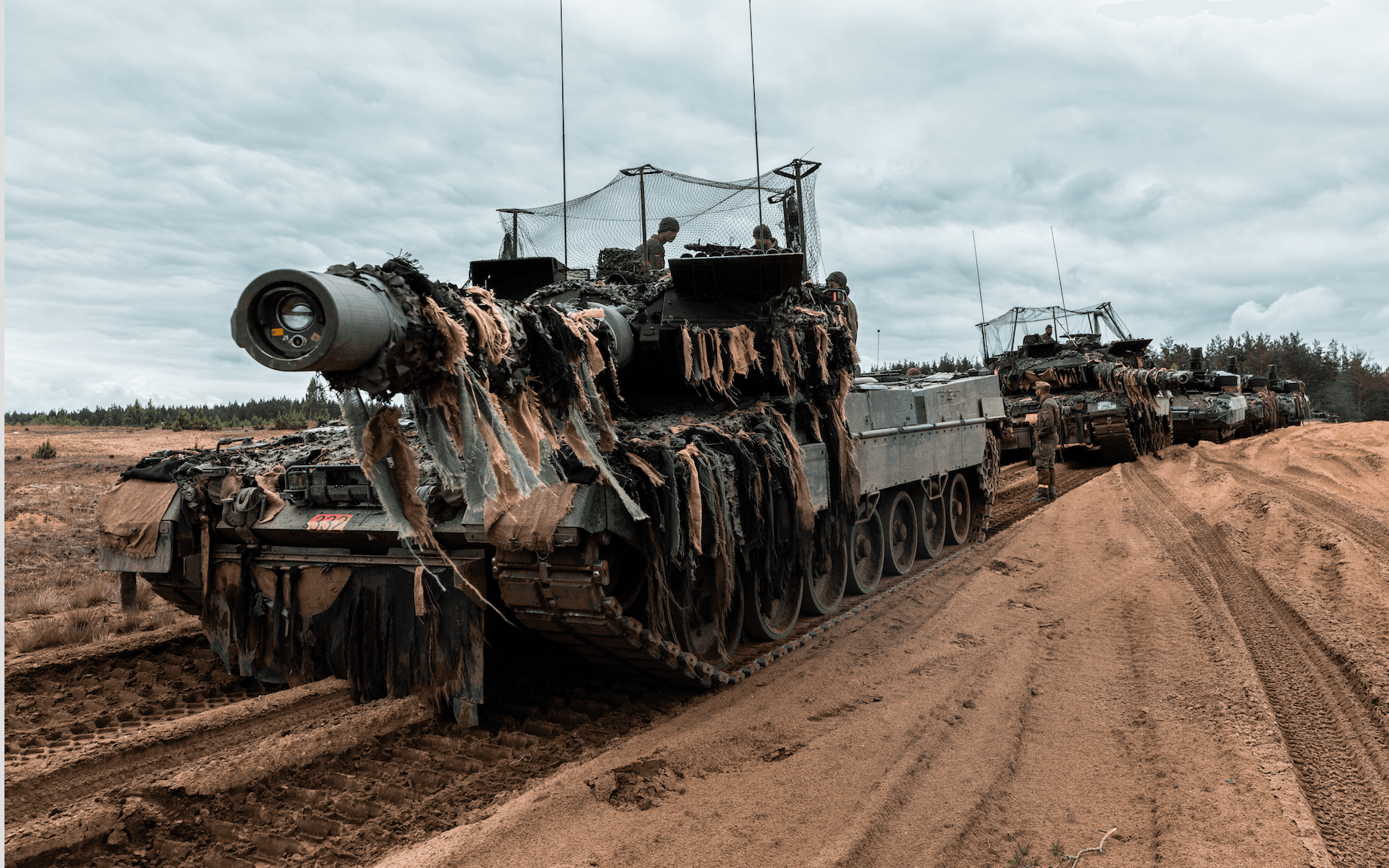
Secretary-General Mark Rutte of Nato said in New York City on Thur. in response to a question about the Alliance's readiness to respond to Russian hybrid attacks in Germany, Poland and the Baltics that Nato is absolutely doing enough but that it isn't always public. We shouldn't fall into Vladimir Putin's trap of losing focus on Ukraine by turning attention to these hybrid attacks and causing society to get a bit scared, Rutte said. "We have planned and prepared for this. We are stronger." German troops, for example, are in Lithuania and conducted an exercise there in June. When asked a year ago about a potential hardcore Russian attack in the Baltic region, Rutte said that Nato is always prepared for every eventuality and that if Putin tried anything like that, the reaction would be "devastating." Yet Czech officials are reportedly discussing a possible Russian occupation of eastern parts of Estonia or Latvia, and Dir. Michal Koudelka of BIS counterintelligence spoke in the Guardian about a possible Russian incursion into Nato territory in a matter of months. He seems to have fallen into Putin's trap. The question is why Koudelka is conducting his own hybrid war against Nato.
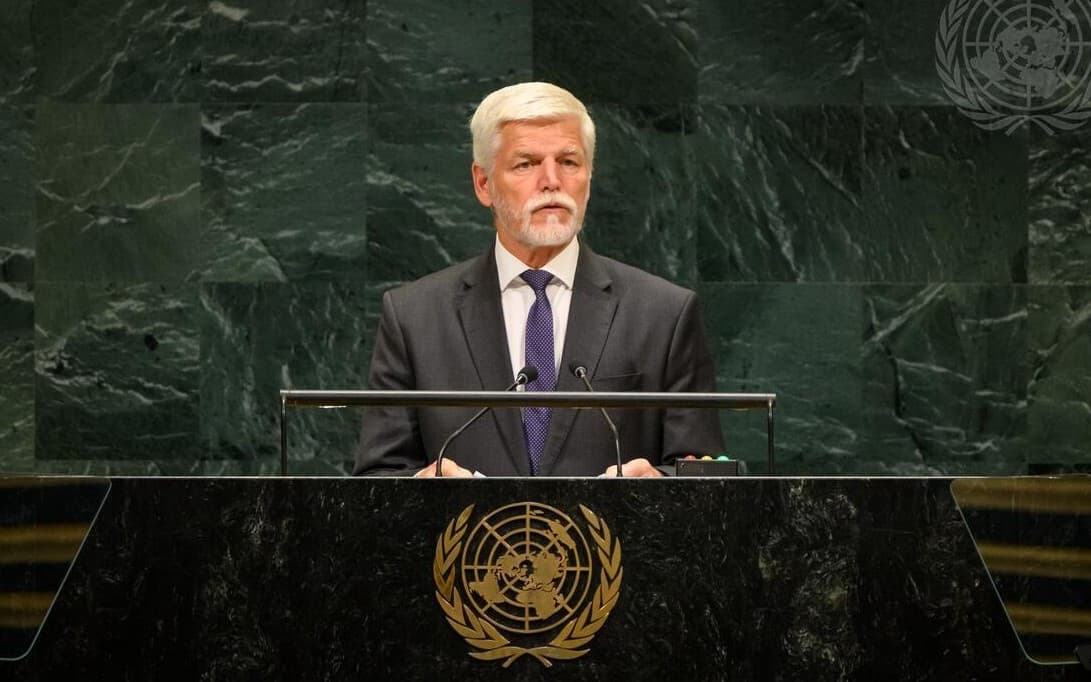
Pres. Petr Pavel's speech at the U.N. General Assembly yesterday must be considered official Czech foreign policy, esp. after the way PM Andrej Babiš said in Parliament on July 2 that the cabinet would prepare the speech and then instruct Pavel to read it. "That's the way it works," Babiš said then. Pavel's comments yesterday about China and Russia were nothing new, except in the context of advances in artificial intelligence. "If AI is to serve humanity," he said, "it must develop within a framework of international rules. No country, and no company, can meet this challenge alone. We need common standards, meaningful public oversight and clear mechanisms of accountability." On the one hand Pavel said that the future legitimacy of the U.N. depends on whether it can be reformed to adapt to a world of growing geopolitical rivalry and fragmentation. Yet on the other hand he - and the Czech government - apparently want AI to be governed now by the very U.N. structures that are failing to adapt. Perhaps the next step will be to support a non-proliferation treaty that guarantees that only a few countries will ever have control over AI.
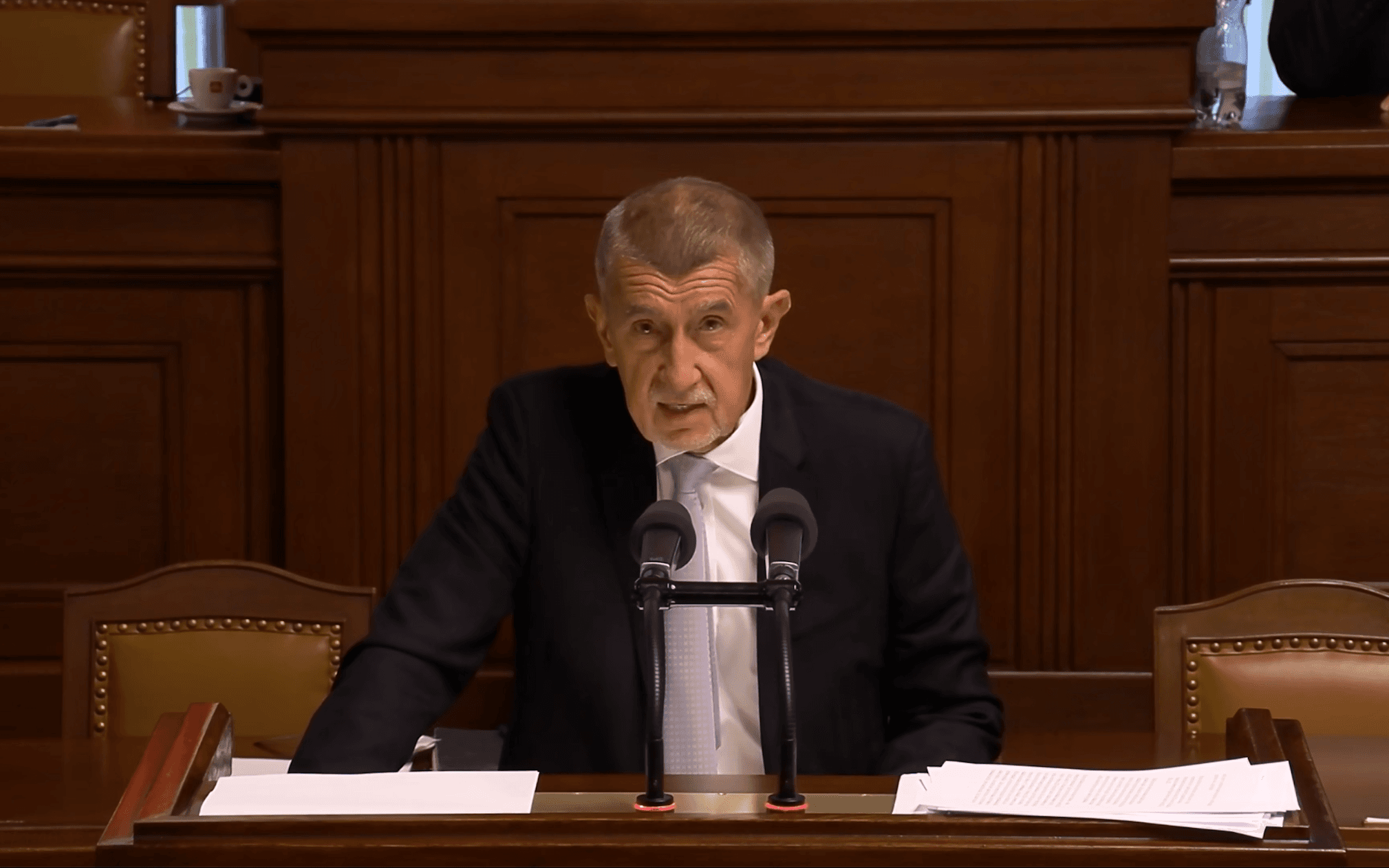
Andrej Babiš used his hour and forty-five minutes in Parliament yesterday during debate on a vote of no confidence in his government to give one of his most thorough indictments of previous Czech governments, including one that he was a member of. There was the OKD privatization, Kapsch, IKEM, and what he called the holy trinity of corruption of the previous government - the bitcoin scandal of ex-Justice Min. Pavel Blažek of ODS, the Dosimeter scandal and the PDZ credit-union "money laundering" of people around Petr Fiala. Babiš didn't mention the Net4Gas acquisition of ex-Industry Min. Jozef Síkela, but Vice PM Karel Havlíček did later. At times Babiš seemed to forget that he is now in charge, such as when he said that STAN and TOP 09 both received money from the corrupt Dosimeter system but "are of course not being prosecuted." As Justice Min. Jeroným Tejc emphasized later, neither the cabinet nor justice minister can dictate to prosecutors how they should proceed in specific criminal cases, but the government has the right to determine what it considers important in criminal policy. Babiš's government will be judged in part by whether it decides that combatting such high-level political corruption is indeed important.
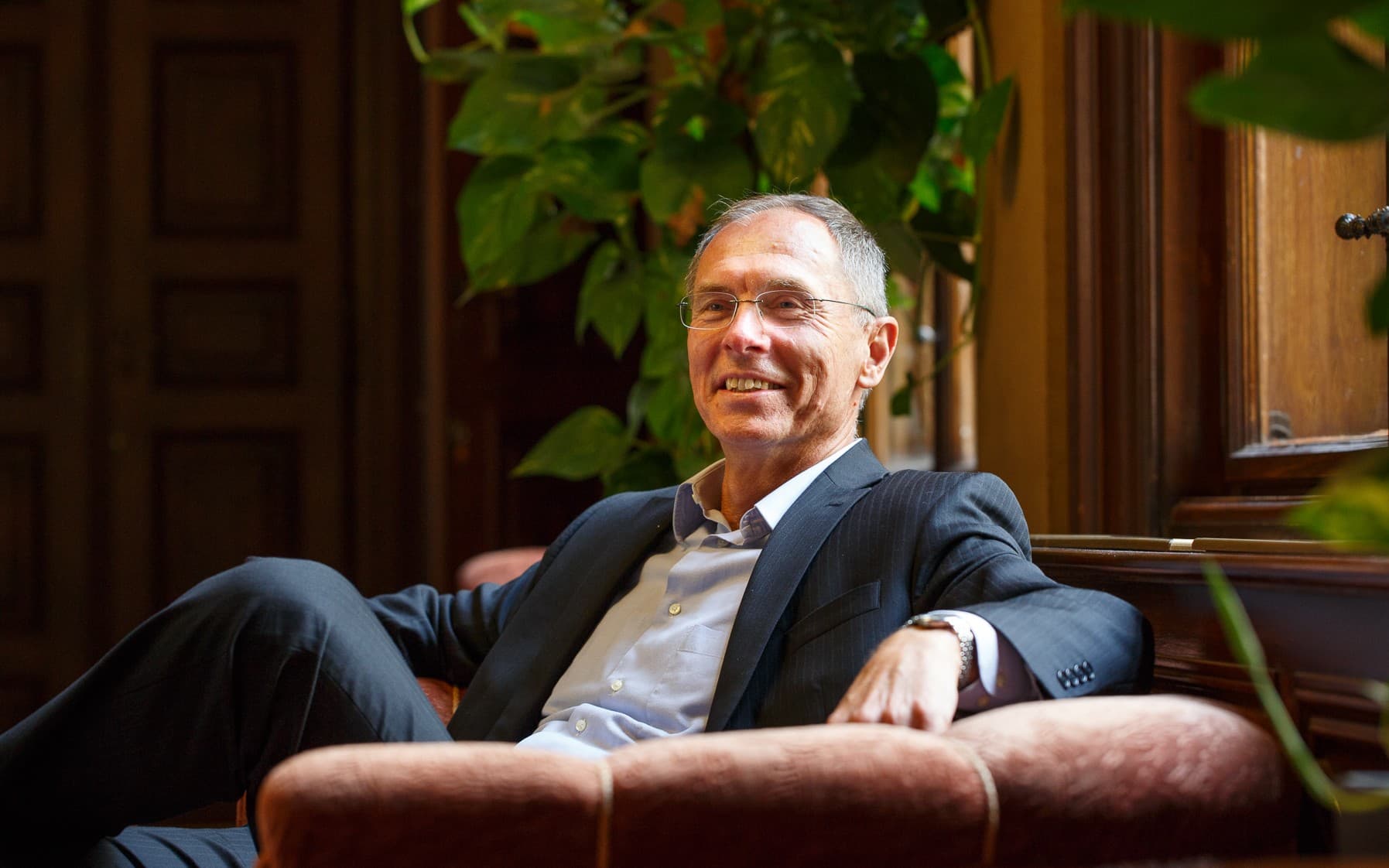
There's little doubt that Andrej Babiš, Karel Havlíček or any other anti-Pavel candidate would have next to no chance of winning the Czech presidential race in 2028 if the current world situation remained more or less the same, but what about an almost-Pavel candidate? A candidate who was like Petr Pavel but also different? Economist Jan Švejnar, who ran for president against Václav Klaus in 2008, told Forbes that he has no further political ambitions, but he turns 74 tomorrow and might find such a challenge to be a nice way to cap off his career. He has cross-party credentials that few others can match. He works for Andrej Babiš as vice chair of the supervisory board of Prague Airport, but he also received a medal of honor on Mon. from Senate Pres. Miloš Vystrčil of ODS. Švejnar supports Babiš's budget, but he sees eye to eye with Pavel on adopting the euro. Under normal circumstances many coalition voters would find Švejnar too much like Pavel, but he might have a fighting chance if he convinced them that he isn't a warmonger and has a better life-long moral profile than the incumbent.
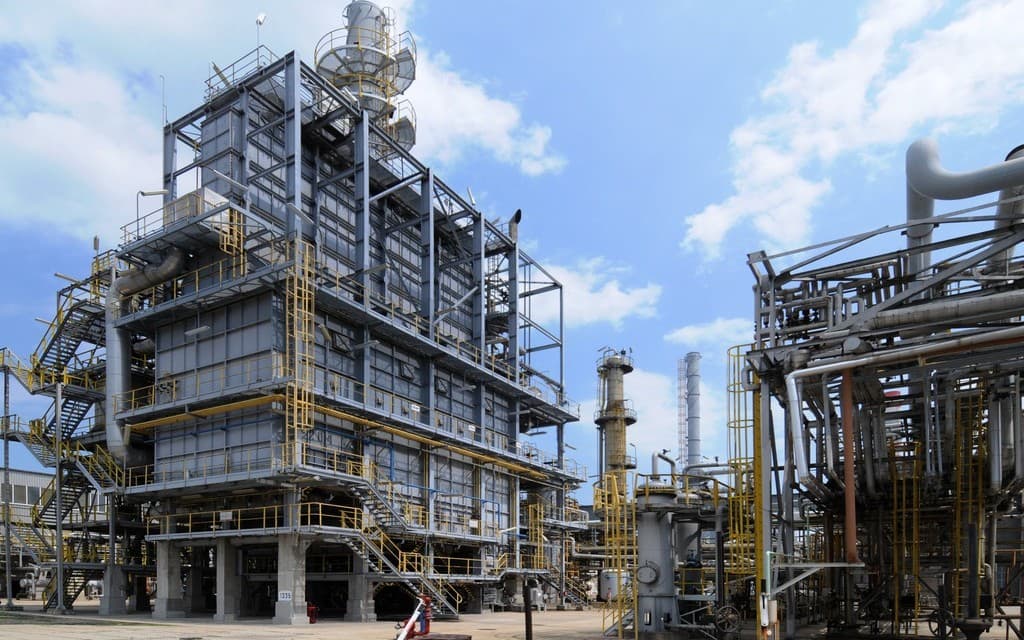
Czech MPs voted in the first reading yesterday to impose a sector tax on gross oil-refining margins, four days after Donald Trump announced his diesel deal with Vladimir Putin. Finance Min. Alena Schillerová of ANO didn't mention Trump or Putin in introducing the bill in Parliament yesterday and instead emphasized that it was several EU countries (Poland, Germany, Austria, Italy, Spain) that raised the issue of high refining margins. Schillerová spoke only of the effects of what is happening in Europe, not the causes. She didn't go into how Europe has hurt itself by supporting or at least tolerating the U.S.-Israeli war in the Middle East, imposing sanctions against Russia and Iran, and not demanding an energy ceasefire between Russia and Ukraine. Orlen Unipetrol has warned that the sector tax will threaten Czech fuel-supply stability and overall energy security at a time of heightened geopolitical tensions. Perhaps Orlen is exaggerating the situation, but Europe does indeed give the impression of wanting to hit the refineries hard while there is still some oil in Europe to be refined.
If Pres. Petr Pavel was the leader of the Czech opposition, who will it be now that Pavel's reputation has been tarnished by his decision to spend election weekend motorbiking in Morocco? Josef Koukal of Právo, which helped to put Pavel high on a pedestal, wrote today that the halo over Pavel's head is crashing to the ground. When certain members of ODS decided that it was time for Václav Klaus to go, they orchestrated a "Sarajevo assassination." ČSSD snubbed Miloš Zeman in the 2003 presidential elections. Martin Kupka of ODS twisted Petr Fiala's arm. The result in such situations wasn't always new leadership, but the opportunity for new leadership to come forward was indeed created. Petr Pavel's inexplicable decision to make elections his third priority creates just such an opportunity for STAN Chair Vít Rakušan. His party is rising in the polls and has big plans both in Prague and on the national level, and yet the biggest obstacle to further consolidation of the opposition under Rakušan isn't Kupka or a STAN faction, but Pavel. And now the president is voluntarily stepping aside.
Geely of China is expanding into Europe, according to CEO Hakan Samuelsson of Volvo Cars, and Volvo will be its strong premium brand. We can learn from the Chinese, he told Handelsblatt, and we need to be open to their innovations. "In this industry," he said "you have to value the competition." Samuelsson's successor by Oct. 1 of next year will be outgoing Chair Klaus Zellmer of Škoda Auto. He's leaving a company that has played a historic role in turning Chinese car manufacturers into such valued competitors. Škoda not only participated in the decades-long transfer of technology to China, but it also helped to mask the gradual financial drain on Volkswagen caused in part by that handover of know how. Škoda's low costs have made it a star in the VW group, but Samuelsson said that the move to the East of European carmakers reminds him of the way American brands shifted production to the Southern U.S. states. Look what happened to Detroit, he said. And now Zellmer is joining Chinese-owned Volvo, whose parent has overtaken VW in China and will consider its chief rival in Europe to be BYD.
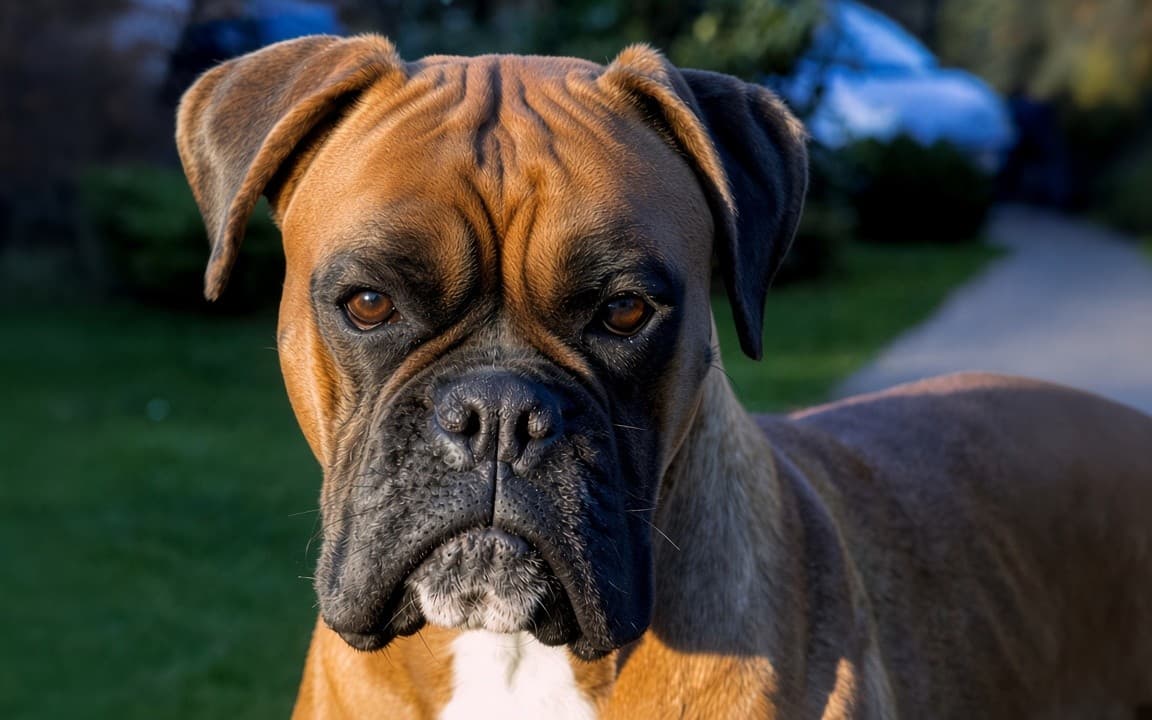
A man was arrested in Surrey, England, in late Aug. for four offenses under the Dangerous Dogs Act. No one was injured, but after an investigation the man was issued with a police caution and an Anti-Social Behavior Warning Letter. Any further offense can now be dealt with swiftly through both criminal and anti-social behavior legislation. According to the Surrey Police, it’s an offense to let a dog be dangerously out of control in either public or private. A dog is considered to be out of control if it injures someone or if it makes someone worried that it might injure him or her. Merely allowing a dog to cause fear of injury is an infraction. Compare that to the way the owners of AI get away with raising their animals. They rush to breed apex predators for fast profit, ignoring genetic stability and safety protocols. When the beasts break out of their cages and start roaming the neighborhood, causing all of humanity to fear for its life, the owners throw up their hands ... and start adding zeros to their valuations. No one even thinks to arrest them and to issue them with a police caution or Anti-Social Behavior Warning Letter.